SEO for online stores

Ecommerce SEO for Product Discovery Across Search and AI

I help online stores get their categories and products found in Google, Bing and AI search. The work connects keyword research, site architecture, faceted navigation, product data and merchant feeds, so shoppers land on the right page at the right point in the buying decision.
On this page
    Add a header to begin generating the table of contents
    Scroll to Top

    Ecommerce SEO Is a Catalog Problem

    Ecommerce SEO is a catalog problem before it’s a content problem. Categories, products, filters, product data and internal links decide whether the right page shows up in Google, Bing and AI search at each stage of a buying decision. I build the work around that whole system.

    It differs from SEO for a lead-generation site in one major way: scale. Variants, filters, pagination and inventory changes can multiply a store’s URLs, and one template rule can change what search engines crawl across the entire catalog.

    The work covers:

    • The searches people use while researching and buying products
    • The category or product page assigned to each search
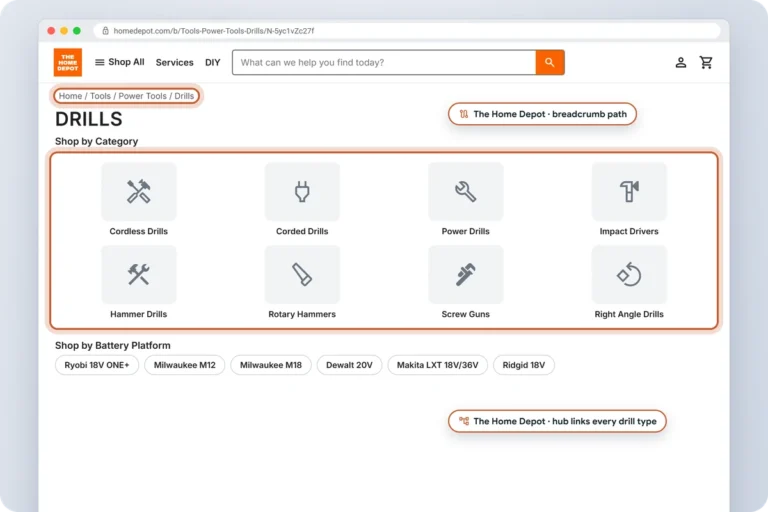
    • How navigation and internal links expose the catalog
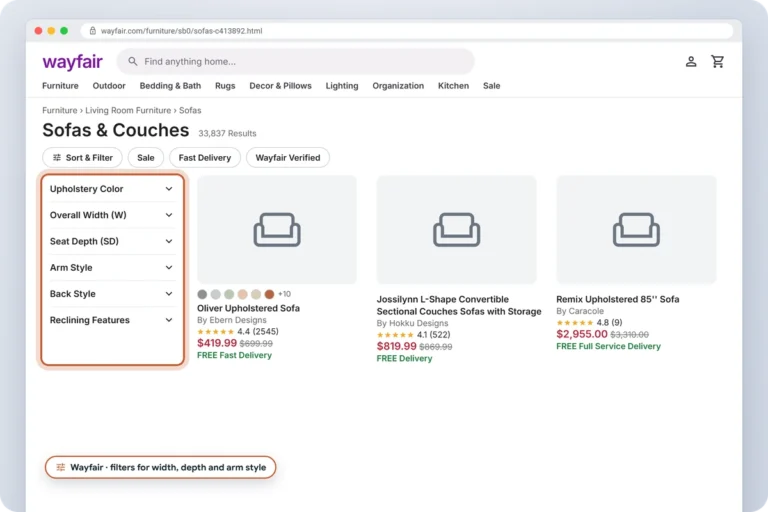
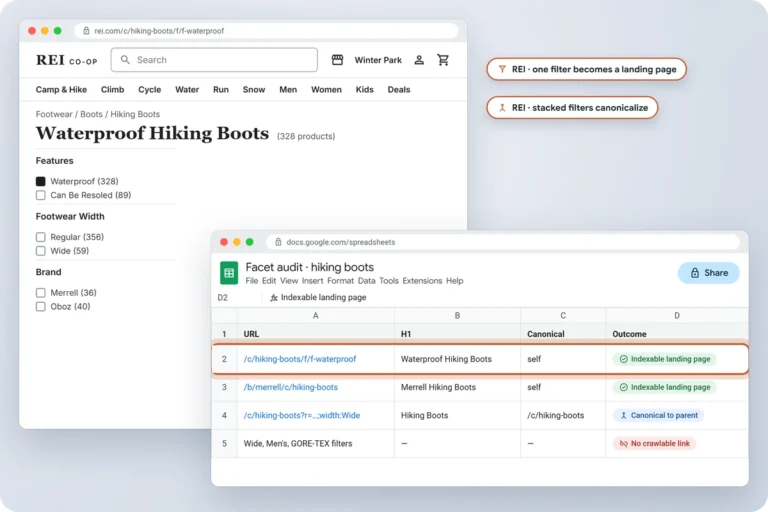
    • Which filter and parameter URLs can be crawled or indexed
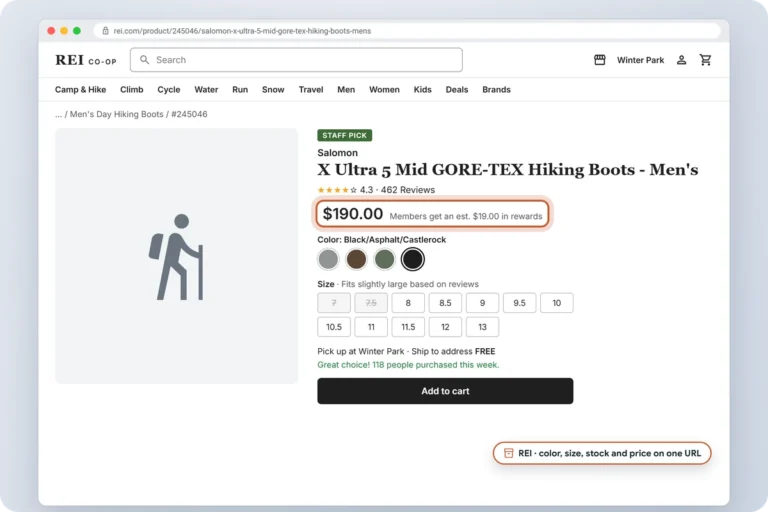
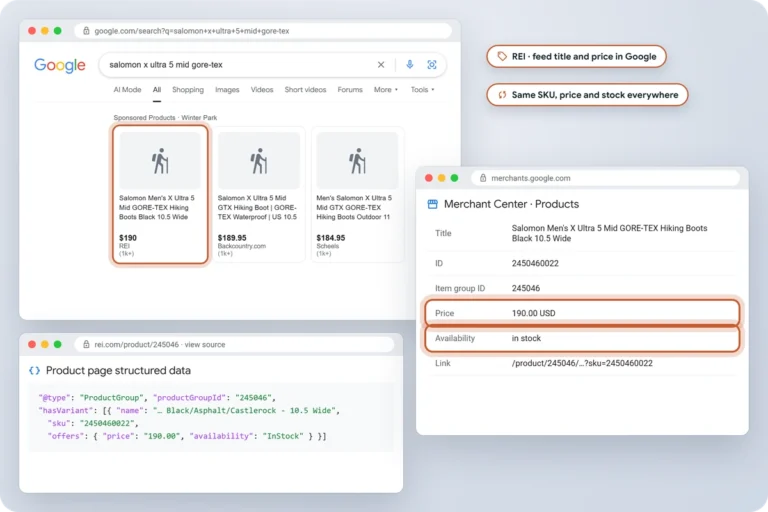
    • Whether product facts match across pages, structured data and merchant feeds
    • How organic and AI visibility turn into qualified visits and sales

    Product Descriptions Can’t Fix a Broken Catalog

    A unique product description helps explain an item. But it can’t fix a catalog that search engines struggle to crawl or understand.

    The problems usually sit in the system around the page. A product reachable only through the internal search box stays hidden. A strong category page competes with filtered URLs aimed at the same need. Accurate schema loses value when its price conflicts with the visible page or the merchant feed.

    That’s why I analyze the catalog as a system: which pages exist, what each page should rank for, how the pages connect and whether every signal describes the same product.

    Read more: Technical SEO

    What's included

    Fixing the Catalog Gaps That Bury Products

    Products get buried when one of these systems breaks — search demand, site architecture, category pages, filters, product pages or product data. Each fix has to work for shoppers and give search and AI platforms consistent facts.
    How it works

    An Ecommerce SEO Audit Built Around Page Ownership

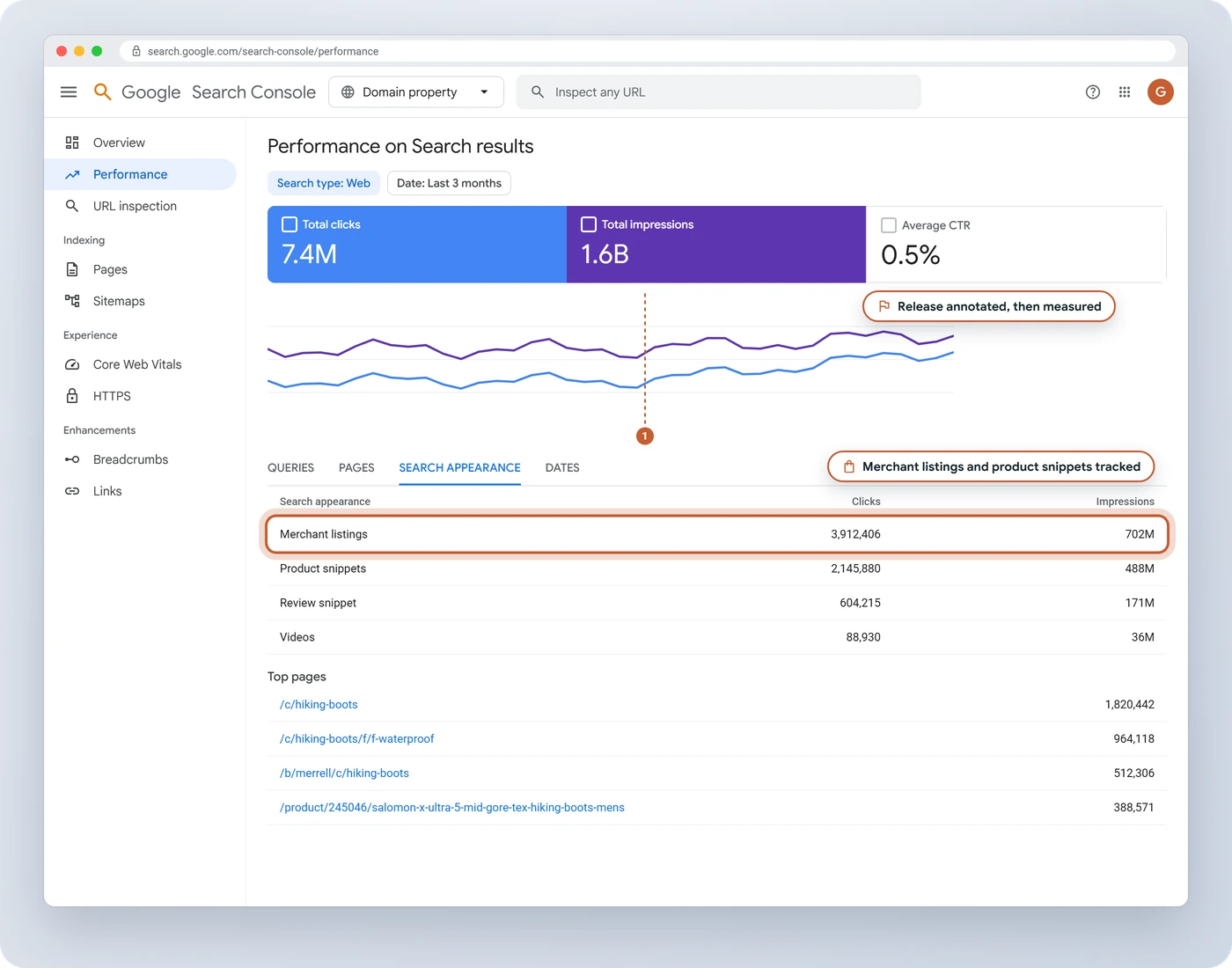
    Search Console performance report tracking merchant listings and product snippets for category, filter and product pages after an annotated release
    Step 1 · Evidence

    Search, Crawl, and Store Data Set the Baseline

    I start with the platform setup, crawl data, indexing, search queries, landing pages, product data, Google Merchant Center diagnostics, analytics and revenue. That baseline separates technical problems from catalog, demand and measurement issues.
    Step 2 · Ownership

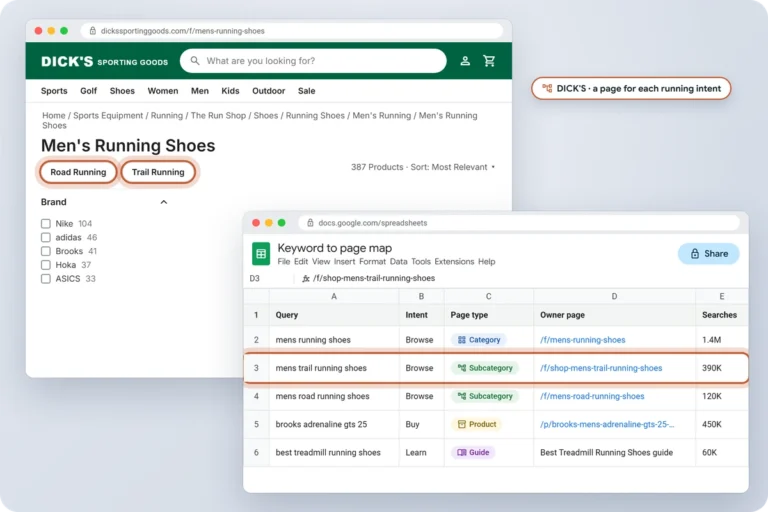
    One Page Owns Each Shopping Search

    Each important shopping search gets one page owner: a category, product, useful facet, comparison or buying guide. That stops filters, collections, product pages and articles from competing for the same query.
    Step 3 · Implementation

    Findings Become Template and URL Requirements

    Findings become requirements, not a list of errors. Each one names the template or URL pattern, the expected behavior, the technical rule, the content change, the owner and the acceptance criteria.
    Step 4 · Validation

    Rankings, AI Citations, and Revenue Measured Together

    After launch, I confirm rendering, crawling, indexing, structured data and feed consistency. Then I track rankings, AI mentions and citations, answer accuracy, qualified visits and revenue where the data allows, and keep measured results separate from assumptions.
    Engagement options

    AEO and GEO for Product Discovery in AI Search

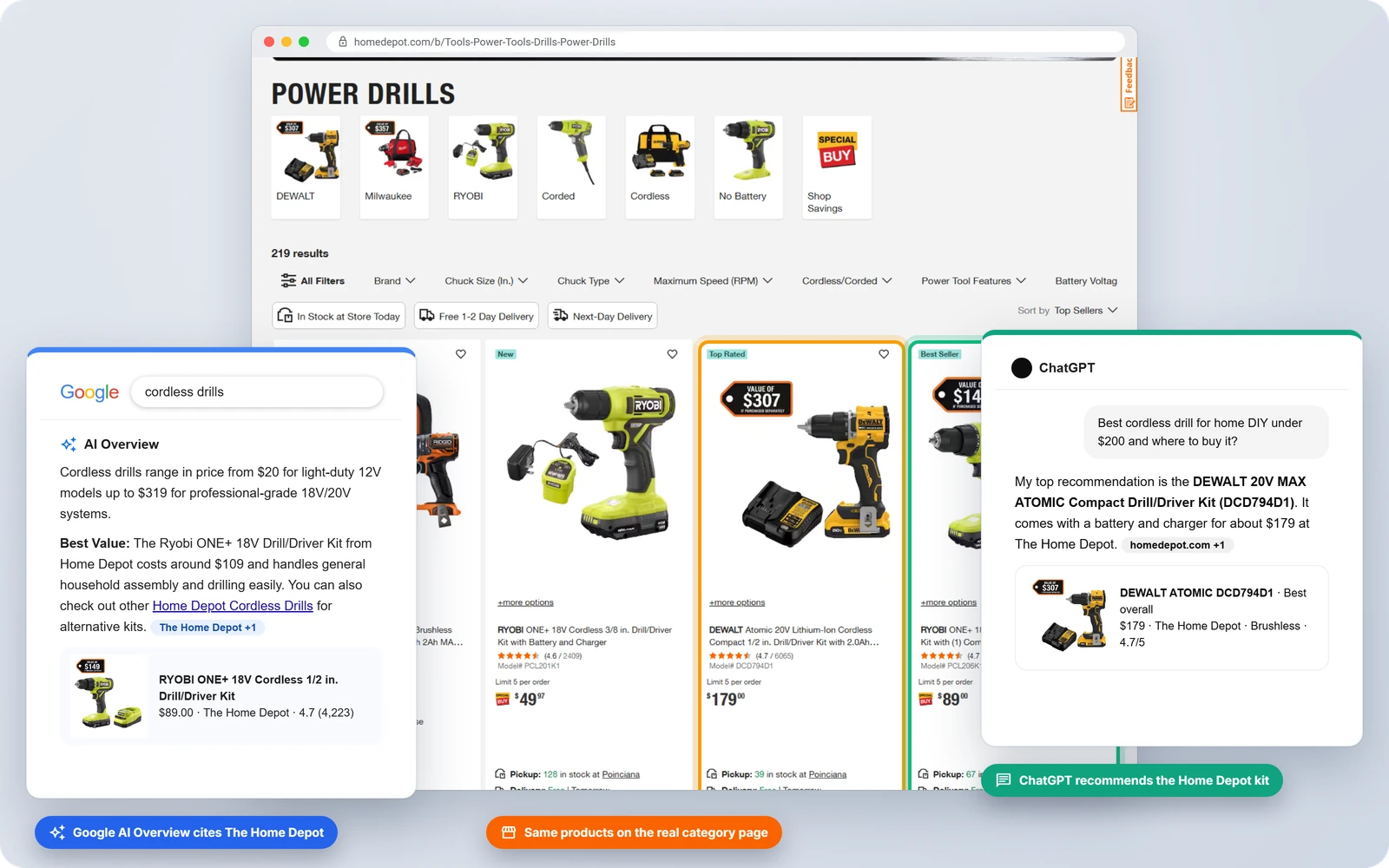
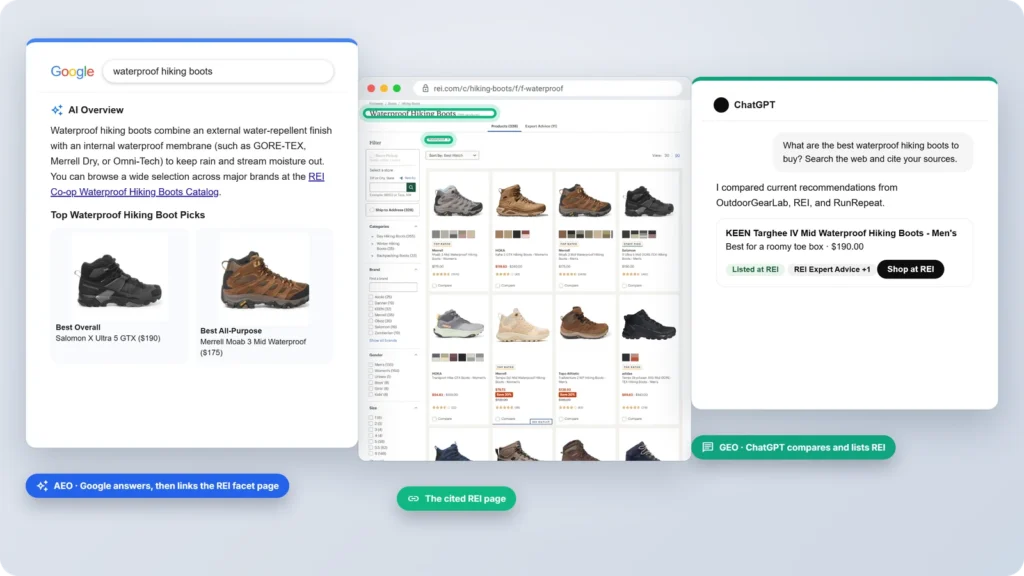
    Google AI Overviews and AI Mode, Microsoft Copilot, ChatGPT search and Perplexity each use their own crawlers, indexes, retrieval sources and citation methods. So I don’t treat guidance from one platform as a rule for all of them.

    Answer Engine Optimization (AEO) for Shopping Questions

    AEO, short for answer engine optimization, puts a direct answer next to each shopping question: compatibility, use cases, differences, specs, availability, shipping and returns. The supporting detail and limits follow the answer, not the other way around.
    Most common

    Generative Engine Optimization (GEO) for Product Comparisons

    GEO, short for generative engine optimization, makes product information easier to use in AI-generated comparisons. Stable product names, comparable specs, defined audiences, clear tradeoffs and current availability give AI systems facts they can compare accurately.

    Google, Bing, and ChatGPT Each Need Separate Checks

    Google’s AI search guidance applies to Google. Bing Webmaster Tools reports its own AI citation data. OpenAI documents OAI-SearchBot, its search crawler, apart from GPTBot. Access affects eligibility. But no crawler setting, schema type or content format guarantees a citation.
    FAQ

    Ecommerce SEO FAQs

    Scale and structure. Online stores manage categories, products, variants, filters, inventory, templates, structured data, feeds and transactions, and one platform rule can affect every product URL. So ecommerce SEO ties technical SEO, site architecture, merchandising, product data and revenue tracking together more tightly than SEO for a lead-generation site.
    No. A variant or filter page earns indexing only when it serves distinct search demand and holds stable, useful content. It also needs crawlable links and consistent canonical tags, structured data and feeds. Other combinations need a different crawl, canonical or indexing rule.
    There's no guaranteed method. First, important pages have to be accessible to each platform's crawler. Then product facts need to be clear, current and consistent across the page, feeds, structured data, policies and credible outside sources. Direct answers and comparable specs make retrieval easier. No AEO or GEO work can promise a mention, citation or recommendation.

    Related SEO Capabilities for Online Stores

    Scroll to Top